Mostrando entradas con la etiqueta IRBrugbyscience. Mostrar todas las entradas

miércoles, 1 de abril de 2020

POTENCIA NEUROMUSCULAR EN EL RUGBY

Cómo desarrollar la potencia neuromuscular al máximo:

1. Importancia de la fuerza
Una persona no puede poseer un alto nivel de fuerza sin ser primero relativamente fuerte.

2. Entrenamiento balístico
Puede ser utilizado eficazmente como principal ejercicio dentro de un programa de entrenamiento de potencia. Hasta el 50% de 1 Máxima Repetición representa un buen objetivo para ejercicios balísticos.

3. Entrenamiento pliométrico
Representa una interesante estrategia para mejorar la potencia máxima neuromuscular. Los ejercicios pliométricos deben involucrar estiramientos, así como cargas que son similares a los encontrados en cada deporte específico y que impliquen poca o ninguna resistencia externa.

4. Pesas
Con cargas entre 50% y 90% de 1 Máxima Repetición parece ser el estímulo de carga más potente para la potencia máxima en movimientos complejos.

5. La adaptación y la ventana individual del deportista
Se sugiere un programa de entrenamiento que se centra en el factor menos desarrollado, que contribuya a la máxima potencia (por ejemplo, la activación neural, la masa muscular, la fuerza rápida, la tasa de desarrollo de la fuerza), que permitirá mayores adaptaciones neuromusculares y por lo tanto dará lugar a mejoras de rendimiento para el deportista.

6. Variabilidad 
La integración de numerosas técnicas de entrenamiento de potencia permite la variación dentro del entrenamiento de la potencia, los meso / micro ciclos, manteniendo la especificidad de forma de lograr una mejora a largo plazo en la potencia máxima.


Referencias: Cormie, Mac Guigan & Newton. Sports Medicine 2011.

www.rugbyandfitness.com
Facebook.com/rugbyandfitness
Twitter @rugbyandfitness

miércoles, 18 de julio de 2018

RUGBY SCIENCE


Influences of GPS & Accelerometry on Practice and the Training Process

I’ve been inspired to write this article mainly by a conference I attended organised by Perform Better and Steve Barrett (who has written for this website before on the use of GPS and accelerometers) but also a number of discussions I’ve had with sports scientists around the UK about their use of athlete tracking technology mainly in soccer and rugby. Credit must be given to Perform Better, Catapult and all the presenters as keeping an open forum such as this may lead to criticism and some uncomfortable questions. But I think and hope I speak for all of them that they do this to share ideas, pick brains and to develop our understanding of the area as a whole. Many of the presenters and the organisers alluded to this as one of  the purpose of the conference.  This article is about facilitating that process and why this website exists. At the conference a number of presentations were delivered through the day by practitioners from elite football (soccer) clubs and a rugby club. I may not mention where all of them were from as I have not have had express permission to mention the clubs or people although I’m sure most of them wouldn’t mind. For those of you not familiar with the website and my background I encourage you to read about the training process. I firmly believe in that model proposed by Impellizerri but think it’s probably useful to add some more information to that model for practitioners. As I learn more I hope to develop and refine that model so that we can start to better understand the training process in relation to some of the newer technology that is becoming available. This newer technology will be the focus of this article and I hope to address and open for discussion three main areas.
  • Applications of athlete tracking technology.
  • Validity of Measurements.
  • Where does it fit into the training process?
Applications of athlete tracking technology.
Steve Barrett very kindly covered some of the applications of GPS and accelerometers in his article a few months back on this website. You can measure distance which is useful but this may not accurately represent movement in all three planes where tri-axial accelerometers pick up additional information. The GPS traces can also give an indication of accelerations and decelerations. This is all information we haven’t always been able to get before therefore now more that ever we can assess the movement demands of specific sports to a greater degree than ever. Here I will differentiate movement demands to metabolic demands. In future after some more consultation with those doing research in the area of metabolic calculations from GPS data will post another article specifically on this. But for the purposes of this article movement demands are the demands expressed by measurement of movement through either GPS and /or accelerometers. So according to the training process these measurements will determine the internal load in relation to the individual’s characteristics. Ultimately it is the internal training load that will determine the training outcome, so is the data useful for anything?
Well there was some effective application of some of this data presented at this conference and some of this I know from coaches in rugby league. There was one approach employed where the percentage of acceleration in each plane was mapped for each training session. This was fairly consistent until the player concerned picked up a back injury. At this point the distribution of acceleration in each plane changes markedly and as the player returned to full fitness the distribution gradually returned to what was normal for him when fully fit. Changes in gait and therefore lateral & vertical accelerometer readings in the vertical and lateral planes may prove to be useful in detecting injuries or for rehabilitation purposes. This was also a great example of assessing a player to his own normative values, an approach that must be adopted more widely if we are to truly understand the individual.
Rob Heyworth from Blackburn Rovers FC showed some interesting data on how manipulation of playing area affected accelerations and decelerations. One of the most important findings with his data for me was the individual variation in the number of these action in each drill. Specific running drills still have place in training for Matt Reeves at Leicester City FC. He’s used his own developed drills to make sure players reach the external intensity & frequency required rather than leave it to chance in a small sided game. Matt argues that heart rate responses can mask how hard the players are working when at high speed so GPS and accelerometers give him the insight HR doesn’t. This is a view supported by many and one I can fully understand especially in very acute bouts of exercise. On the other hand when the speed is zero, heart rate will still be elevated. My belief is that at very high speeds there may be underestimation of intensity instantaneously with heart rate, but the internal load accrued from the elevated HR between bouts somewhat reduces this underestimation and the aerobic contribution to repeated sprint exercise has also been shown previously. The anaerobic component is difficult to factor in and one of the challenges faced although time spent at sprint intensity in actual match play is only 2%. On the other hand could it and should it be treated as a different entity and analysed as such.
Regardless of this issue it is another method of effective application of GPS data, where it allows movement demands and patterns to be examined and trained.  Newer developments in these devices with the integration of gyroscopes and magnetometers with GPS and accelerometers may give us more insight into movement demands in future. It will definitely allow insight into the direction a player is facing when they are moving and this may have implications for injury prevention, mapping turning patterns, subsequent training and injury prevention. So the technology has somewhat enhanced our understanding of movement demands. I am sure there are many other uses when it comes to tracking athlete movement that influences training regimens and if you would like to share yours please post on the comments section below.
One of the main ways a number of clubs presenting at the conference monitored their loading is as a percentage of match demands for the various components these technologies can measure. I am still unsure of the rationale for this and no one has been able to provide me a good reason as to why this is done. Is there a scientific underpinning to this or is it just because we can measure match demands so we will use it as a yard stick. For me for it to be viable there must be a dose-response relationship where load equivalent to a certain number of games produces a proportional response and I have not seen that evidence yet.  Add to that the variances between positions, within position, through systems of play, tactics etc, the match demands become blurred. Different approaches have been used to come up with the “match demand” from using friendly match data to reserve team data to create positional demands. A further question that arises if training is designed to mimic match play, does this provide the overload required to adapt and meet match demands comfortably? An approach presented at the conference by a rugby club was the idea of a “worse possible scenario”, where players are pushed beyond the measured demands of their sport. This would make sense from an overload and progression perspective. But if these practices are adopted solely on the use of external load measurements as an individual’s condition changes the internal load due to that external load will change and that will ultimately affect the training outcome not the percentage of game values or amount of external work per se. This is not to say those presenting at the conference were ignoring internal load. 

So this leads me to question how these movement demands and measurement of movement translates into the actual physiological stress for each individual. Can it ever do this without assessment of the internal exercise stress whether it is mechanical (external) or cardiovascular (internal)?
Validity of Measurements.
 One of the measures of external load that I am yet to be convinced by is the measure of accelerometer derived load whatever the companies decide to term it. This measure is taken quite seriously by some and others I know who have used these system for over 5 years totally discard it. I conducted short impromptu twitter poll and I found that many practitioners and coaches have realised the limitations, are unsure of what the numbers mean or don’t care much about them.
In my opinion some attention has been drawn to the “term” load as this means we can periodize more efficiently and accurately. No doubt that companies have used this in their sales pitch in the early days of trying to sell these systems. I challenge the accuracy of these measures as a measure of load both in a mechanical sense and metabolic sense. It was great at this conference to get some evidence of something I’ve always theorized. Whenever I’ve been asked about the suitability of accelerometer derived load I give two scenarios the answers to which I think as it stands places accelorometry derived load in context. The 1st example is of squatting: An accelerometer measures the displacement in a given time in a given plane. What would it measure if I was to squat 100 kg at the same velocity as I squatted 50 kg? If the accelerometer measures what it is suppose to then it will give us the same value regardless of mass and the stress on our muscles. So this is an example of it not being able to discriminate within the individual on a mechanical basis mainly due to acceleration being measured independently of mass the product of which would give us a measurement of force.
I’ve also always theorized about accelorometry derived load on a wet pitch and dry pitch. I theorized on a softer pitch there would be more absorption and so the accelerometer would move less reducing the score. However for those of us that have ran or played on soft/wet pitches we find it much harder. Some evidence presented at this conference looked at the impact of ground hardness on accelerometer derived load. Softer ground increased internal load by elevated heart rate which would support the theory of it being harder but the accelerometer derived load didn’t change. Again accelerometry doesn’t discriminate in the way needed. To understand really why this happened all 3 planes of movement would have to be compared to see if any changes occurred or whether gait was maintained but required greater muscle recruitment hence greater oxygen demand and increased heart rate. 
Furthermore is every movement measured in a game situation or training a physiologically stimulating movement. Some of you may have data that can assess this! For example what is the load derived from a fall or a contact (usually defined by a spike on the graph) and what is the equivalent of that load from running? Does X amount of running = Y load from a fall? Are they both as physiologically stimulating? The answers to these questions will give us some insight and I look forward to your thoughts.  So that’s the mechanical side of it. In terms of the metabolic side of the argument the movement efficiency as a result of adaptation will always change within the individual. So as an athlete gets fitter and/or stronger the accelerometer load values would still be the same or the exact same exercise despite lower internal stress. There is some work being done on metabolic power derived from accelerometers and I will examine this in more detail in a future post.
Despite what I have written my aim is not to rubbish the use of accelerometers but just to raise awareness of the potential limitations, especially when used in isolation and examined in the wrong part of the training process as explained later in this article. Credit must go to these guys working hard with the data trying to make it effective and useful. Recently I also met with Richard Akenhead, sports scientist at Newcastle United FC. One of his doctoral studies examined the validity of accelerations from  GPS traces, you can find a poster of his research on Research Gate. In summary he found that accuracy in straight line accelerations at speeds above 4 m˙s-1 was compromised. This limitation must also be considered especially when we try to match or overload values from sport specific situations at the high end, the error involved may represent values that actually are not achievable.
There maybe other issues you are aware of or maybe you want to bring to attention of everyone or want to disagree with some of the statements I’ve made. Add comments below or I will happily publish a journal type rebuttal on the website.
Where do acceleromters & GPS fit in the training process?
Finally comes the training process, I have added some thoughts to the training process diagram that has helped me clarify where GPS and accelorometry may help to make an impact based on the research and practice I have come across. Again you may feel you want to add to this or change it. Although the applications are clearer its place in the training process remains. What I have seen and heard and somewhat disagree with is how all these load measures internal, external or subjective tell you different things and all must be looked at together. I think examining such data in that way may give us some insight but I have also seen that argument used to justify clumping external, internal load and subjective load together to provide a number. If (big if) all these numbers are valid, the summation of these must give a valid measure of “overall load” is the assumption I’ve seen made. According to the training process model the external load in relation to individual characteristics (genetics, fitness status) will give an internal load which will then determine the training response. It is not a simple addition or multiplication of each variable. If some of the practices I’ve seen were put into a model external load would be in the box where internal load is now. Some of this has stemmed from the relationships accelerometry derived load shows with supposedly valid measures of internal load. I would encourage you to examine the validity of those so called “valid measures of internal load”. This has been covered on the “training load” section of this website.
In summary the usefulness of accelerometry and GPS cannot be denied and it can impact directly on practice. The extent to which it impacts on practice accurately and efficiently is the area for debate. I feel sometimes it’s uses are overstated especially when internal load is partly or entirely replaced by external load in the training process model. Is equipment driving practice through overstated uses of “fanciful numbers” as it was put quite nicely put by one coach on twitter or scientific principles? Hopefully some of the studies I and others have planned over the next 12 months will give us answers that may help understand the direction we should be going in. A study of mine that was recently published integrating the internal and external load will be just one of many areas myself and fellow collaborators will be examining. If any of these area’s interest you feel free to get in touch.
The whole purpose of this website is to generate discussion and examine practice globally. So whether you agree or disagree share your thoughts in the comments section below. There are people out there with much more experience and insight on this area than me and I and all the followers of this website would love to hear from you.
Author: Dr Ibrahim Akubat
Twitter / Facebook / Instagram @rugbyandfitness 

miércoles, 8 de mayo de 2013

RUGBY SCIENCE


The myth of learning styles


Before becoming a writer, I spent a year-and-a-half training as a science teacher and then working at a secondary school in Croydon. During my short stint in education, the biggest buzzword was “differentiation.” We were told that any given class contains pupils with a range of abilities, and that different children have different learning styles.
This second idea was drilled into us over and over again. Some children are visual learners, who acquire and process information best through images; others are auditory learners, who learn best by listening; and yet others are kinaesthetic learners, who learn best by doing physical activities. To be effective teachers, we had to try to establish each child’s preferred learning style, so that we could tailor our teaching style and materials accordingly.
The idea of learning styles is based on the theory of multiple of intelligences, developed in the early 1980s by psychologist Howard Gardner of Harvard University. Gardner claimed to have identified 7 distinct types of intelligences (visuo-spatial, bodily-kinesthetic, musical, interpersonal, intrapersonal, linguistic and logical-mathematical), and that this “challenge[s] an educational system that assumes that everyone can learn from the same materials in the same way”.
Gardner has been expounding his theory, and pushing for educational reforms, ever since. He has been hugely successful: the learning styles approach became enshrined by educators, and was being promoted on the Department for Education website until as recently as 2007. Today, the concept is widely accepted, and is used in schools throughout the country.
It is, however, a myth.
There is no scientific evidence that children do indeed acquire information more effectively if it is presented to them in their preferred learning style. In fact, according to Paul Howard-Jones of the University of Bristol, there is some evidence to the contrary. Speaking at a workshop about the impact of neuroscience on society at the BNA Festival of Neuroscience yesterday, he pointed out that some research actually suggests that children learn better when presented with information in a way that takes them out of their “comfort zone.”
Last year, Howard-Jones and his colleagues set out to investigate teachers’ general knowledge about neuroscience, and to determine the prevalence of myths and misconceptions about the brain in education. The researchers contacted 242 teachers in the UK and Holland, asking them to complete an online survey containing 32 statements about the brain, and to indicate whether each one was true or false.
They found that the concept of learning styles was the most prevalent misconception: 82% of the teachers in their sample believed that it is true, even though there’s no brain research to back it up, or classroom studies into the effectiveness, or otherwise, teaching tailored to pupils’ preferred learning style. The results also showed that belief in neuromyths was correlated positively with general knowledge about the brain – that is, the more general knowledge a teacher has the more likely they are to believe that myths and misconceptions about the brain are true.
This suggests that although teachers have a growing interest in neuroscience and how it might be applied to education, they have difficulty distinguishing between correct and incorrect information about the brain. This is concerning, because it means that schools are wasting time, money and effort to implement “brain-based” teaching methods based on misinformation about neuroscience.
Howard-Jones and his colleagues believe that the solution is to explicitly educate teachers about neuromyths and the lack of evidence for brain-based educational programs. They also urge researchers to explain clearly what conclusions can and cannot be drawn from their published studies, and to closely monitor media coverage of their work. Such collaborations would, they argue, reduce the prevalence of neuromyths, and prevent their continued proliferation in the classroom.

miércoles, 1 de mayo de 2013

RUGBY SCIENCE


The safest position on a rugby pitch?


As an enthusiastic rugby player and a newly qualified Doctor, I am often asked by teammates what is the safest position on the rugby pitch. Is the assumption that playing on the wing is for wimps who don’t want to get hurt?
Rugby Union is growing in popularity, yet there is often a preconception that it can be dangerous and serious injuries are likely to occur, especially in certain positions. Interestingly, research indicates that the amateur game has a similar incidence and severity of injury to football and a much lower game injury ratio than other high intensity collision sports such as American football.
Within the game of rugby, analysis in the amateur game has found that flankers (men) and centres (women) were the most frequently injured during games, with the highest percentages of major injuries (causing more than 7 days training or matches to be missed) reported to be for the No 8 position (men and women). Fly halves and fullbacks were the least often injured in the men’s game whilst the scrum half got off lightest in the women’s game. In terms of injuries in training, it is bad news for any amateur men with presentations to do at work the following day as the head/face is the source of most complaints, whilst women suffer more knee injuries[i].
There has been far more research and analysis into the injury profiles of different positions within the professional game. Studies have shown that for every match 33 days of absence are incurred for forwards, and 28 days for backs. Forwards tend to suffer from shoulder, knee and ankle/heel problems whilst the lighter but fleeter of foot backs suffered most frequently from shoulder, hamstring and knee problems[ii].
Following concerns about injuries in the forwards and wasted game time due to the resetting of scrums, the International Rugby Board recently set up an expert Scrum Steering Group to give advice on law changes and referee instructions[iii]. Experimental law changes were brought in for the scrum at the start of the 2012/13 season. For this season, the instructions from the referee have been ‘crouch, touch, set’. Front rows crouch then touch and using their outside arm touch the point of the opposing prop’s outside shoulder. The props then withdraw their arms and the referee calls ‘set’ when the front rows are ready. The front rows will then set the scrum.
The RFU, in conjunction with the University of Bath, is currently undertaking a second study to see how the scrum can be further improved by looking at other engagement techniques, from this crouch, touch and set approach to a modified technique so that props maintain the touch before a deemphasised engagement technique.
Results are due this year with a focus on player welfare and trying to improve player, coach and referee education around scrummaging technique. At a time when there has been significant controversy regarding the understanding and refereeing of the scrum from within the professional game[iv][v], results are eagerly expected.
[i] Kerr HA, Curtis C, Micheli LJ et al. Collegiate rugby union injury patterns in New England: a prospective cohort study. Br J Sports Med;42:595-603.
[ii] Brooks JHM, Kemp SPT, Injury-prevention priorities according to playing position in professional rugby union players. Br J Sports Med 2011; 45:765-775.
**********************************************
Dr Tim McEwen is a Foundation Year 1 Doctor in the South Thames Deanery. He currently works at East Surrey Hospital. A former Harlequins U19 and U21 player, he now plays for Guildford RFC.

miércoles, 17 de abril de 2013

RUGBY SCIENCE

How not to fumble a rugby ball


Drs. Lewis and Carré in the University of Sheffield’s Department of Mechanical Engineering have been measuring the dynamic friction between the material of the ball and the skin on the fingertips and palm, and the mitts that some players choose to wear under different weather conditions. They’re looking to answer one question: what’s the best way to ensure that players don’t fumble the ball?

“Catching and handling a ball with great skill and confidence is practically second nature to players at this level,” says Dr Lewis. “But handling errors are still seen in professional rugby games and even more so in amateur rugby, so ball manufacturers are working constantly to provide extra grip to overcome the problems that occur, not all of which are related to player ability. Given that a slip at the wrong time could mean the difference between winning and losing a match, it’s important that this potential is explored – and there’s still scope for improvement.” he said.
Rugby balls are now manufactured with pimples on the surface of their four panels to improve handling, and players may also wear fingerless gloves, known as mitts, which also have a surface texture to afford even greater grip, especially in wet conditions.

In a paper published in the journal Tribology International, Drs Lewis and Carré have shown that simply adding pimples to equipment does not necessarily deliver the intended result.
They believe that equipment manufacturers need to consider the implications of the dynamic friction produced by the different loads used in catching, throwing and manipulating the ball using different parts of the hand – and how the characteristics of the pimples interact with skin or mitts under the different conditions on match day.

“When we looked at the rugby balls themselves, used in dry conditions with no mitts, balls that had more closely spaced pimples were better for grip. But in wet or muddy conditions, the density of the pimples allowed a film of moisture to form between them, so in these conditions, a ball with wider pimple spacing is better,” he said.
In addition, the researchers found that mitts with coarse texturing can have a detrimental effect on grip. “To truly work as intended, the texture on the mitts needs to interlock with the pattern on the ball. We found that mitts with coarse texturing actually reduced grip in some cases,” said Dr Lewis. Of the mitts tested, synthetic leather mitts produced the overall best performance across all conditions, as the imposed texture interlocked best with the pimples on the ball.

Rugby ball manufacturers have introduced different pimple patterns for different types of rugby union, for example the pimple pattern on balls for ‘rugby sevens’, a form of rugby where the ball is almost constantly handled and rarely kicked, is more widely spaced than the pattern on balls for the conventional 15-player version of the game. “But this has been done without the fundamentals of textured visco-elastic material interactions with skin being fully understood, and in any case, our results show that the pimple pattern on the mitts is an equally important factor,” says Dr Lewis.

Rather than being a criticism of current equipment design, Dr Lewis sees his results as an opportunity for sports equipment manufacturers. “Technology is helping athletes of all skill levels improve performance in so many other sports, why should rugby union be left out? Our work suggests that there’s no one optimum design for all weathers, so manufacturers could design different balls targeted at countries with particular climates, for example. And our results could help feed some science into the design process of mitts too, to allow players to match the mitts’ pimple design with the type of ball being used to ensure better interlocking. At the moment, adding texture is simply assumed to improve grip, but this isn’t necessarily so.”

Read more at http://scienceblog.com/61318/how-not-to-fumble-a-rugby-ball/#Kfq8dqEhPxQ6jlRD.99 


miércoles, 3 de abril de 2013

RUGBY SCIENCE

The Development, Retention and Decay Rates of Strength and Power in Elite Rugby Union, Rugby League and American Football : A Systematic Review.

Source

Sport Performance Research Institute New Zealand, AUT University, Mail code P1, AUT-Millennium, 17 Antares Place, Mairangi Bay, Private Bag 92006, Auckland, 1020, New Zealand, travis.mcmaster@aut.ac.nz.


Abstract


BACKGROUND AND AIM:

Strength and power are crucial components to excelling in all contact sports; and understanding how a player's strength and power levels fluctuate in response to various resistance training loads is of great interest, as it will inevitably dictate the loading parameters throughout a competitive season. This is a systematic review of training, maintenance and detraining studies, focusing on the development, retention and decay rates of strength and power measures in elite rugby union, rugby league and American football players.

SEARCH STRATEGIES:

A literature search using MEDLINE, EBSCO Host, Google Scholar, IngentaConnect, Ovid LWW, ProQuest Central, ScienceDirect Journals, SPORTDiscus™ and Wiley InterScience was conducted. References were also identified from other review articles and relevant textbooks. From 300 articles, 27 met the inclusion criteria and were retained for further analysis.

STUDY QUALITY:

Study quality was assessed via a modified 20-point scale created to evaluate research conducted in athletic-based training environments. The mean ± standard deviation (SD) quality rating of the included studies was 16.2 ± 1.9; the rating system revealed that the quality of future studies can be improved by randomly allocating subjects to training groups, providing greater description and detail of the interventions, and including control groups where possible.

DATA ANALYSIS:

Percent change, effect size (ES = [Post-Xmean - Pre-Xmean)/Pre-SD) calculations and SDs were used to assess the magnitude and spread of strength and power changes in the included studies. The studies were grouped according to (1) mean intensity relative volume (IRV = sets × repetitions × intensity; (2) weekly training frequency per muscle group; and (3) detraining duration. IRV is the product of the number of sets, repetitions and intensity performed during a training set and session. The effects of weekly training frequencies were assessed by normalizing the percent change values to represent the weekly changes in strength and power. During the IRV analysis, the percent change values were normalized to represent the percent change per training session. The long-term periodized training effects (12, 24 and 48 months) on strength and power were also investigated.

RESULTS:

Across the 27 studies (n = 1,015), 234 percent change and 230 ES calculations were performed. IRVs of 11-30 (i.e. 3-6 sets of 4-10 repetitions at 74-88 % one-repetition maximum [1RM]) elicited strength and power increases of 0.42 % and 0.07 % per training session, respectively. The following weekly strength changes were observed for two, three and four training sessions per muscle region/week: 0.9 %, 1.8 % and 1.3 %, respectively. Similarly, the weekly power changes for two, three and four training sessions per muscle group/week were 0.1 %, 0.3 % and 0.7 %, respectively. Mean decreases of 14.5 % (ES = -0.64) and 0.4 (ES = -0.10) were observed in strength and power across mean detraining periods of 7.2 ± 5.8 and 7.6 ± 5.1 weeks, respectively. The long-term training studies found strength increases of 7.1 ± 1.0 % (ES = 0.55), 8.5 ± 3.3 % (ES = 0.81) and 12.5 ± 6.8 % (ES = 1.39) over 12, 24 and 48 months, respectively; they also found power increases of 14.6 % (ES = 1.30) and 12.2 % (ES = 1.06) at 24 and 48 months.

CONCLUSION:


Based on current findings, training frequencies of two to four resistance training sessions per muscle group/week can be prescribed to develop upper and lower body strength and power. IRVs ranging from 11 to 30 (i.e. 3-6 sets of 4-10 repetitions of 70-88 % 1RM) can be prescribed in a periodized manner to retain power and develop strength in the upper and lower body. Strength levels can be maintained for up to 3 weeks of detraining, but decay rates will increase thereafter (i.e. 5-16 weeks). The effect of explosive-ballistic training and detraining on pure power development and decay in elite rugby and American football players remain inconclusive. The long-term effects of periodized resistance training programmes on strength and power seem to follow the law of diminishing returns, as training exposure increases beyond 12-24 months, adaptation rates are reduced.
PMID: 23529287 [PubMed - as supplied by publisher]


martes, 26 de febrero de 2013

RUGBY SCIENCE


La paradoja del entrenador-psicólogo

Los entrenadores que ejercen la dirección técnica son, con frecuencia, responsables de un amplio grupo de personas, entre las que se encuentran los propios deportistas y otros miembros del equipo técnico, como otros entrenadores, el preparador físico, el equipo médico y, últimamente, también el psicólogo.


Hasta hace poco el entrenador venía siendo en cierto modo un gurú que disponía de soluciones para todo lo que podía ser necesario resolver en relación con el rendimiento deportivo de los deportistas y, en muchas ocasiones, también en aspectos de su vida personal. El entrenador ha sido preparador físico, psicólogo, médico, padre y consejero, todo en uno. Así, la estrecha relación que ha unido a deportistas y entrenadores ha dado lugar a firmes lazos de confianza mutua que han conducido al éxito muchos proyectos. Al mismo tiempo, otros entrenadores con menos conocimientos, más limitaciones o menos habilidad para establecer el tipo de relación mencionada no han conseguido encauzar adecuadamente sus proyectos en solitario y, más tarde, han recurrido al concurso de otros profesionales: primero médicos, luego preparadores físicos y más tarde psicólogos, entre otros.

Siguiendo estos argumentos, podría dar la impresión de que cuando los entrenadores son más autosuficientes, con sus amplios conocimientos acerca de la preparación, su formación como entrenadores y su experiencia, tienen mayor garantía para la solución de todos, o casi todos, los asuntos relacionados con sus deportistas. Así, un entrenador con experiencia suele desarrollar habilidades psicológicas y estrategias para ayudar, impulsar el rendimiento psicológico de sus deportistas. Este entrenador comprende las situaciones por las que pasa el deportista y observa las posibles soluciones; además, tiene en su mano el poder para manipular poderosos instrumentos que van desde la conversación individual y la charla colectiva hasta la modificación estratégica de las cargas, horarios o pautas de entrenamiento físico o técnico.

La experiencia nos ha dicho que en el pensamiento profundo de muchos entrenadores descansa la idea de que si el entrenador requiere la ayuda de un psicólogo del deporte es debido a que algunos asuntos escapan a su control. En cierto modo, sería como reconocer la incapacidad del entrenador para llevar a cabo su cometido. Esto se basa en dos ideas erróneas:

- El entrenador tiene que saber de todo y puede solucionarlo todo.
- El psicólogo soluciona problemas cuando no queda otro remedio (igual que un bombero cuando acude a apagar un incendio).

Aquí viene la paradojacuanto menos sabe de psicología un entrenador y menos habilidades psicológicas tiene, está más convencido de que el psicólogo del deporte no le podría ayudar. Y también ocurre al contrario, que cuando un entrenador sabe más psicología mejor entiende la necesidad de estar bien asesorado en este aspecto por un psicólogo del deporte.

Es cierto que muchos psicólogos en el pasado se acercaron al mundo del deporte con modelos equivocados y sin mucho conocimiento acerca de las particularidades de las intervenciones en este contexto. Así, todavía hoy hay colegas que creen ser capaces de ayudar a cualquier deportista utilizando aproximaciones que quedan fuera de contexto y que pueden ser percibidas como una pérdida de tiempo por los entrenadores y los propios deportistas. Es sabido que el tiempo y la eficiencia son palabras clave en el mundo del deporte y que cualquier actividad que no ayude estará, probablemente, siendo un obstáculo.

Sin embargo, en la experiencia profesional hemos encontrado entrenadores con profundas lagunas en aspectos en los que el asesoramiento psicológico habría sido de mucha ayuda, pero que no consideraban la necesidad de ello. Al contrario, concebían la figura del psicólogo como un complemento para otros (deportistas, entrenadores en formación, etc.), pero no para sí mismos. El psicólogo en estos casos estaría para ayudar a conducir a los deportistas al terreno al que el entrenador no ha sido capaz de conducir.

Se entiende mejor con un ejemplo: una deficiente capacidad oratoria del entrenador da lugar a que los deportistas no comprendan suficientemente el mensaje y, por tanto, no ejecuten adecuadamente las acciones que él espera. Lejos de mejorar sus propias habilidades de comunicación, el entrenador suele pretender que el psicólogo mejore la motivación y la concentración del equipo cuando están completamente a la deriva. Para más ayuda, les grita sin autocontrol. Obviamente, el psicólogo puede hacer poco para mejorar el estado psicológico de los jugadores en esta situación y una intervención indirecta a través del entrenador, mejorando así la comprensión de los conceptos, favorecerá la motivación por unos mismos objetivos, la compenetración de los deportistas y una mejor disposición psicológica en general para el rendimiento.

Afortunadamente, también se pueden encontrar entrenadores hábiles que saben nutrirse de todo lo que pueden considerar favorable para sus objetivos. Con frecuencia son entrenadores que tienen una disposición más favorable hacia el conocimiento profundo de las ciencias del deporte, que comprenden que el conocimiento está en permanente crecimiento y siempre es posible mejorar un poco más si se dispone de más elementos de juicio. En este caso, se entiende que una sola persona no puede apresar todos los recursos útiles para los deportistas sino que un buen entrenador será probablemente quien sepa coordinar dichos recursos de la manera más inteligente para obtener los objetivos deseados. Estos entrenadores suelen tener muchas habilidades psicológicas para impulsar el trabajo colectivo y son capaces de transmitir la idea de que la unión hace la fuerza, por lo que son capaces de montar un equipo de trabajo multidisciplinar en el que todos los miembros del grupo suman algo.

Este es precisamente el otro punto de la paradoja, puesto que los entrenadores que más habilidades psicológicas tienen y saben más de psicología, mejor comprenden en qué medida es necesario el asesoramiento psicológico para potenciar la eficiencia de la preparación física, técnica y táctica, para la prevención de situaciones psicológicas de riesgo, tanto para el grupo como para algunos deportistas, y deje espacio para intervenciones de mejora de las habilidades mentales de forma individual.

Autor: Larumbe Zabala, Eneko
Link: http://www.psicologiadeportiva.net/revista/articulo/50/print.html


martes, 19 de febrero de 2013

RUGBY SCIENCE


Should All Coaches Be Analyst?


I have always found that there is something peculiar about the role of a Performance Analyst. While most other sports science disciplines can be left to their own devices, the role of an analyst is so ingrained in the coaching process that I often wonder should analysis just be something every coach does and not a separate discipline?
A strength and conditioning coach for example can really be left to his own devices when it comes to programme design, implementation and delivery. Yes there will be meetings and input from management but it’s not something head coaches would have to oversee directly. A plan is made and it is up to the S&C coach to oversee -and report on.

Chinese Whispers
But a performance analysts role is different. Analysts (mostly) don’t take team meetings or coaching sessions, often they prepare videos or information and bring it to the coaches attention, and if it’s useful, the coaches pass it onto the players. It’s often like analysts operate with a translator between them and the players – I’m not sure nutritionists, psychologists or S&C coaches operate likewise. All sports scientists get frustrated at times if their ideas are not being heard but other disciplines seem to own their space that bit more.


Who’s Responsibility?
This often brings me back to the point that more coaches need to take on some analysis responsibility. It doesn’t have to be everything, as we have been witnessing over the last few years the role of the analysts is ever expanding. But perhaps coaches should take on more analysis duties. Somebody I follow quite a lot on twitter is Stuart Lierich (@kickcoaching). His expertise is in Kicking but he constantly mentions analysis as a big part of his coaching process. What I find interesting is Stuart doesn’t seem to think the ‘analysis’ should be done by somebody else – he objectively monitors kicks both in game and in practice and develops a training programme accordingly. He is not taking over once the analysis is done by somebody else he assumes responsibility for it. Presumably this allows him go into greater depth than an analyst who must cover the entire game can and he can be more flexible in his use of analysis. Andy Elleray, who contributes to this site, would be another who very much combines his role as GK coach and analyst. Perhaps this combination of skills is better than each one existing separately?
Analysis is relatively new and remember a lot of current coaches grew up pre-technology, I wonder as younger coaches come through, who feel much more comfortable using technology, will they consume some of the current jobs of the Performance Analyst?
Link: http://thevideoanalyst.com/should-all-coaches-be-analysts/

martes, 12 de febrero de 2013

RUGBY SCIENCE


Pseudoephedrine and Preexercise Feeding: Influence on Performance

Pritchard-Peschek, Kellie R.; Osborne, Mark A.; Slater, Gary J.; Taaffe, Dennis R.; Jenkins, David G.

Abstract

Purpose: This study examined the influence of pre-exercise food intake on plasma PSE concentrations and subsequent high intensity exercise. Additionally, urinary PSE concentrations were measured under the same conditions and compared to the present WADA threshold.
Methods: Ten highly trained male cyclists and triathletes (age 30.6 +/- 6.6 years, body mass 72.9 +/- 5.1 kg, O2max 64.8 +/- 4.5 ml[middle dot]kg-1min-1) undertook four cycling time trials (TTs) each requiring the completion of a set amount of work (7 kJ[middle dot]kg-1 BM) in the shortest possible time. Participants were randomized into a fed or non-fed condition and orally ingested 2.8 mg[middle dot]kg-1 BM of PSE or a placebo (PLA) 90 min before exercise; in the fed trials, they consumed a meal providing 1.5 g[middle dot]kg-1 BM of carbohydrate. Venous blood was sampled at 30, 50, 70 min and pre-warm up and post-exercise for the analysis of plasma PSE and catecholamine concentrations, urine was also collected for the analysis of PSE concentration.
Results: Independent of the pre-exercise meal, 2.8 mg[middle dot]kg-1 BM of PSE did not significantly improve cycling TT performance. The fed trials resulted in lower plasma PSE concentrations at all time points compared to the non-fed trials. Both plasma epinephrine and blood lactate concentrations were higher in the PSE compared to the placebo trials and pre- and post-exercise urinary PSE concentrations were significantly higher than the threshold (150 [mu]g[middle dot]mL-1) used by WADA to determine illicit PSE use.
Conclusions: Irrespective of the pre-exercise meal, cycling TT performance of ~30 min was not improved following PSE supplementation. Furthermore, 2.8 mg[middle dot]kg-1 BM of PSE taken 90 min before exercise, with or without food, resulted in urinary PSE concentrations exceeding the present WADA threshold.
(C) 2013The American College of Sports Medicine

Link: http://journals.lww.com/acsm-msse/Abstract/publishahead/Pseudoephedrine_and_Preexercise_Feeding__.98468.aspx

martes, 5 de febrero de 2013

PROMISING NEW ACL RESEARCH PUBLISHED


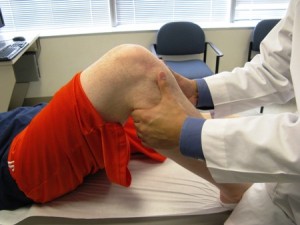
Two new Level II evidence systematic reviews regarding Anterior Cruciate Ligament (ACL) management have been published in the Journal of Bone and Joint Surgery. The first, published earlier this summer, stated the effectiveness of ACL prevention training programmes. Three objectives were underlined by the authors. These were; the effectiveness of ACL prevention programmes, evidence for the “best” programme and to investigate the quality of current research. Eight studies met the inclusion criteria of prospective, controlled studies that directly compared ACL injury prevention programs with no treatment in human subjects focusing on clinical treatment or outcome. While a significant decrease in ACL tear after prevention programmes were found (52% in female athletes, 85% in male athletes), the authors remained undecided over which programme was most effective. Interventions found to effective included: balance board, stretching, progressive lower limb resistance training, plyometrics and sports specific agility training. The authors concluded that the level of evidence was low with lack of appropriate blinding or randomisation in every trial.
The second study, focusing on rehabilitation after ACL reconstruction was published at the beginning of October. Twenty-nine Level I or II trials, published between 2006 and 2010, were included in the review. Topics reviewed included; postoperative bracing, accelerated strengthening, home based rehabilitation, proprioception and neuromuscular training, water therapy, stair climbing, slide board exercises, psychological and proprioceptive training and creatine. Bracing was found to not only be unbeneficial to rehab but also costly. While further research is needed on early return to the sport, it was found that static eccentric quadriceps and isometric hamstring strengthening at week three post-op can accelerate strength gains. The authors found it difficult to draw a conclusion on home based rehab due to bias. However, they did state that a well-motivated patient could obtain reasonable results from a minimally supervised home based rehab programme. Neuromuscular interventions were found to be unlikely to contribute large improvements in outcomes or aid a faster return to sport. Vibration training may lead to faster and more complete proprioceptive recovery but the review recommends that further research is needed. Overall, the authors concluded that while these interventions may be beneficial they should not be performed to the exclusion of range-of-motion, strengthening, and functional exercises.
This recent research surrounding ACL prevention and rehab is welcoming as it is an area where the role is physiotherapists is constantly evolving. This is evident in a recent audit highlighted on the Chartered Society of Physiotherapists (CSP) website, where it was found at two hospitals in England that two thirds of patients with ACL ruptures didn’t require surgery and that physiotherapy rehab sufficed. 
Links to both reviews and the CSP article are available below: